Sunday, December 29, 2013

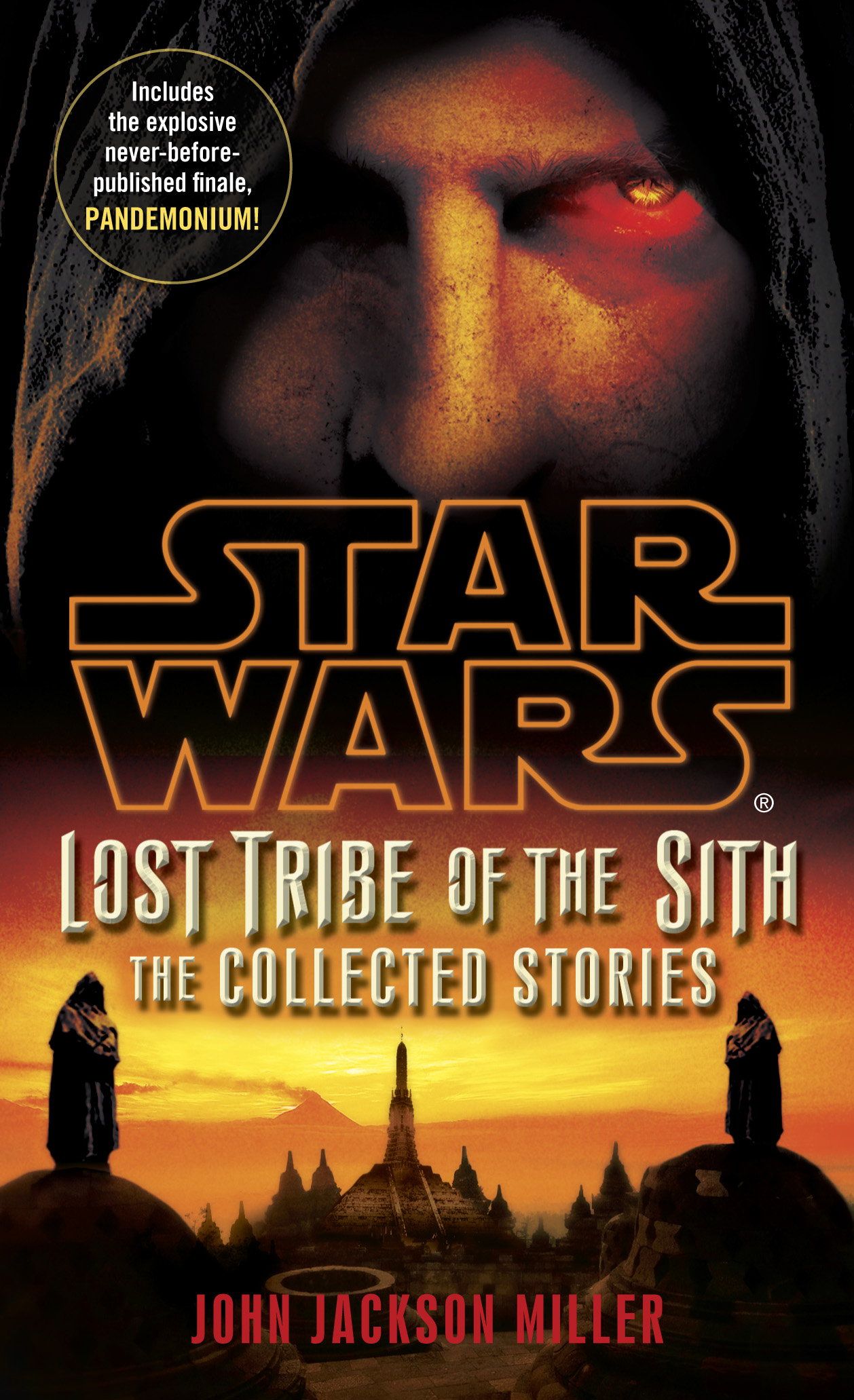
Book #65. Lost Tribe of the Sith

Lost Tribe of the Sith: The Collected Stories, by John Jackson Miller. Nook.

It has been a while since I've read much in the Star Wars Extended Universe. I am old enough that there was a point in time where I had read nearly all of the novels,  and had the realistic goal of "catching up" with the novels in the EU. But I slowed down a bit, and the EU started cranking out fiction at an alarming rate. When it became obvious that I would never be current with the novels, I just gave up for a while. Like a decade.

But I saw that these these stories were available in the Nook store, and I took a chance with the first one. Obviously, I enjoyed each one enough to keep downloading and reading the next one.

The stories in this collection are titled individually: Precipice, Skyborn, Paragon, Savior, Purgatory, Sentinel, Pantheon, & Secrets. These start 5,000 before the events of A New Hope, or BBY (Before the Battle of Yavin), to use terminology from the EU. This is the age of the Old Galactic Republic, and they tell the backstory of the "Lost Tribe," which resurfaces a few decades BBY, as part of the Fate of the Jedi novel series. These books are told from the perspective of the Sith, and their part in the war against the Republic.

I am glad I jumped back into the EU with these. Even though they occurred so far before the "main action" of Star Wars, they tell interesting stories of people on the "other side" of the battle. If you like books told from the "other" perspective, I would recommend them. And if you are a fan of prequels (prequels in general, I mean, not movie Episodes 1-3), I would also recommend them. Good stories, and better world-building.

Source: Nook store.


Friday, December 27, 2013

Book #64. The Venerable Bede

The Ecclesiastical History of the English People, by The Venerable Bede. Unabridged audio.

I am a sucker for church history, but it took me a while to get around to reading the most famous piece of church history from the first millennium.

The focus is on the Christian history of the British Isles. This has been a particular interest to me since I ran across the music of the UK-based band Iona more than 20 years ago. Bede hits the main characters and locals that I was hoping for, such as Iona, Lindisfarne, Columba, and Columcille.

There are certainly moments of dryness in the accounts, as many of the people and circumstances have been lost to time (save this book). But many of the accounts were colorful, and so although some of the chronologies did not stick with me, many of the stories did. The relationships between the various British peoples, both with each other and with the authorities in Rome, form a backbone for the history.

In terms of theology, the issue that Bede spends the most time on is the correct dating for Easter. Although backing the Roman interpretation, he is gracious to other believers who believe differently.


Source: I listened to audio version of the book, provided free by LibriVox. An offshoot from The Gutenberg Project, LibriVox records public domain books, and makes them available on their website and through iTunes.

Wednesday, December 25, 2013

Book #63. Rooted in Good Soil

Rooted in Good Soil, by Tri Robinson. Paperback.

A third-generation farmer, as well as being a pastor, Tri Robinson has an interesting vantage point from which to analyze Jesus' parable of the sower. Robinson notes that the differences in outcomes in the story are due to the underlying condition of the soil. Robinson combines his knowledge of Scripture and farming to explain how we can develop the "good soil" required for spiritual growth.

The chapter relating the Trinity to the forces of soil, sun, and rain was the strongest part of the book. In it, Robinson tells vignettes from his life to show his own personal understanding of the roles of Father, Son, and Spirit in his own life. The chapter on the miracle of photosynthesis was also strong, discussing personal growth in a way I had not heard before.

The founding pastor of a large Vineyard church in Idaho, Robinson has written about the intersection of faith and the natural world before. His prior works, Saving God's Green Earth, and Small Footprint, Big Handprint, both argue for evangelical approaches to environmentalism and sustainability. He argues persuasively that a biblical worldview includes care and concern for creation.

This is not a theological tome, but is instead a readable treatise of discipleship, from a man who has been a church leader for many decades.

Source: borrowed from a friend.

Monday, December 23, 2013

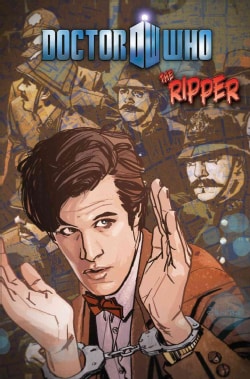
Book #62: Doctor Who: The Ripper

Doctor Who: The Ripper, by Tony Lee. Art by Tim Hamilton, Andrew Currie, and others.  Graphic novel collection.

IDW Publishing continues to produce excellent Doctor Who comics, most if not all written by Tony Lee. I reviewed a collection of his stories featuring the 10th Doctor, and this graphic novel collects his first four issues featuring the 11th Doctor.

The collection starts with a light-hearted tale, "Spam Filtered," in which holographic spam infests the Tardis -- this is Amy and Rory's fault. In this story, Lee captures the feel of the Doctor's wackier stories, and is perfect for a one-off story, especially one that starts a series with a new Doctor. Humorous stories are notoriously hard to end, but Lee ends this story in a humorous way that even makes sense in the logic of the story.

The core of this collection is the 3-issue "Ripper" arc, in which case the Doctor and the Ponds arrive in 1888, right in the middle of the Ripper killings. A trail of Kryon radiation leads the Doctor to recognize that something distinctly non-Earthly may be happening in Whitechapel, both in terms of the villain and the lead detective.

Amy asks the common question of why they can't stop the killings. When the Doctor explains that he can't change the timeline, Rory quite accurately points out that he does just that ALL THE TIME! Another excuse is given, which makes some wibbly-wobbly sense, but Rory's follow-up question was one of the highlights of the collection.

There are a range of artists whose work went into these stories, and generally speaking, they do a workable job. There are times when Rory is nonrecognizable, but the likenesses of both Amy and the Doctor tend to be consistently on-model. But overall, these four issues make for a very good read.

source: public library

Saturday, December 21, 2013

Between audiobooks (4)

I have written before of my habit of listening to a few episodes of PodCastle or Escape Pod in between audiobooks -- short story palate cleansers between novels. I am still waaaay behind (10 months?) on these podcasts), so I listened to a bunch of Podcastles last week, just after Collateral Damage. I listened to these episodes:


PodCastle 224: The Navigator and the Sky, by Ian  McHugh. An grandfather-granddaughter myth, with a Polynesian twist.


PodCastle 228: The Terror of Blue John Gap, by Sir Arthur Conan Doyle. A "journey to the Centre of the Earth" style adventure story. Kind of scary, truth be told.

PodCastle Miniature 71: When the Jack-O-Lanterns want to change their destinies ...

PodCastle 229: The Tonsor's Son, by Michael John Grist.All about shaving and barbers, and other violent stuff. Where else would the world's most famous blades end up, other than barber shops? Gruesome and quirky.

PodCastle 230: Little Better Than a Beast, by T.A. Pratt. Another solid story from Pratt.

PodCastle Miniature 72: The Best Worst Monster, by Peter S. Beagle. Monsters aren't supposed to grow souls, and when they do ...

Thursday, December 19, 2013

Guest appearances!

I was asked to appear on a few comic-book podcasts, and all of those episodes were released this past week! I enjoyed these recording, as I got to Skype with some veteran podcasters, and also plug the work that we've been doing over at the Relatively Geeky network.

In episode 20 of Trentus Magnus Punches Reality, I joined host Trentus and another guest, veteran podcaster Michael Bailey. We talked about the story 'Red Son,' which shows what would have happened if that rocket from the exploding planet Krypton had landed in Cold War Russia, instead of Kansas. A good comic, and a good podcast episode.

In episode 21 of Trentus Magnus Punches Reality, the three of us talked this time about a story that proposes a mashup of Batman and Green Lantern. The story, "Batman: In Darkest Night," was not very good, but I think our discussion of it was.

In episode 92 of Just One of the Guys, I joined host Shawn Engel to talk about the 3-issue "Hate Crimes" story arc. These issue, featuring versions of Green Arrow and Green Lantern, tell a very subtle story about racism, politics, pop culture, and the news media.

I have found the podcasting community to be a very welcoming and generous place, and I thank both Trentus and Shawn for inviting me on their show. I thoroughly enjoyed doing it.

Tuesday, December 17, 2013

Book #61: Collateral Damage

Collateral Damage, by Stuart Woods. Unabridged audio.

This latest novel in the Stone Barrington series picks up where the last one left off, with a terrorist on the run after an attempt on the President Will Lee's life in Los Angeles. The lone survivor of that attack takes her reign of terror to both the UK and New York City.

In Woods' first 20 novels or so, he developed a range of series that all took place in the same world. One of the fun aspects of reading these books is that characters from other books were mentioned in passing, or events from one book would have consequences in a book from another series. But in the last ten books or so, he has brought all of his characters into the Stone Barrington series.

In this book, Barrington and CIA operative Holly Barker work with the Lees and the MI5 operatives from prior books to take on this latest case.His old buddy Dino Bichetti from the NYPD also plays an important role in the conclusion of the case, and his personal life takes a positive turn.

And these recent books have also moved away from the smaller-scale mysteries and adventures to more epic terrorism and espionage novels. Ths transition has been mostly smooth, as the later books have continued to tell exciting stories, with believable action and strong characters.

source: public library