Thursday, May 9, 2013

Consequences & Reboots

All I look for in a sequel (or a series) is consequences. That things from the first story, be they plot elements, character aspectws and relationships, or world-building, have effects in the second story. And beyond.

Maybe no fictional world did this better than the TV show Babylon 5. J. Michael Straczynski planted clues in season 1 that did not bear fruit until season 3, or 4, or even 5. And there were consequences to actions: relationships changed, plot elements flowed beautifully. Things that happened, the ways people behaved, just "made sense."

Suzanne Collins does this very well in the Hunger Games books, as well -- at least, in the two that I have so far read. I noted it in the recently-reviewed Catching Fire, and I have enough general spoiler knowledge to know that this continues in the last novel. I am a big fan of this type of writing. To me, that's what makes a piece of fiction realistic -- the specific work can can be set in any world, alien or fantastical or historical, but if there is reasonable cause-and-effect occuring, then I can think of it as "realistic."

Which brings me to the frustrating run of Wonder Woman I recently read, the Odyssey storyline that ran in issues 600-614. This was a re-boot, or re-imaging, or re-something of the Wonder Woman character, started in 2010, that was going to launch the character with a new and modern take, to really establish her as one of their big guns, a pillar of the DC Universe. They even gave her a new look, with long pants, that I kind of liked.
They tasked the above-mentioned J. Michael Straczynski to write this. He is a big-name TV guy, and has written movies, and done a fair amount of comic work. Putting JMS' name on this storyline was evidence of how seriously DC wsa taking this re-boot, or re-imagining, or re-whatever this was.

The problem is, that after about four issues, DC Comics announced their New 52 initiative. They said that all of their books would be re-booted , or re-imagined, or re-something-ed in September of 2011, which totally pulled the rug out from this effort. JMS left the book, and story was finished, just in time for the New 52.
And that's the problem with this stroy, and I relate it to what I said above about Catching Fire. By the time I got halfway through these Wonder Woman issues, I grew more frustrated. The problem was that I knew that however this major ended, it would be wiped away. These issues were literally inconsequential -- it had no conseqences. Nothing in this story stuck, as another reboot happened as soon as this story ended.

I like the New 52 Wonder Woman, and the new creative team -- I reviewed the first six isues here. It's a good book, but reading the Odyssey collection pointed out many of my frustrations with modern comics. One of the big reasons I read as many older stories as modern ones, is this constant churning and changing. We regularly get new origins, new first issues, new everything, at a much quicker pace than prior decades. 

There is no sense in modern comics that what happens in any one issue will have consequences in the next one.

Tuesday, May 7, 2013

Teaser Tuesday

Teaser Tuesdays is a weekly bookish meme, hosted by MizB of Should Be Reading.  Anyone can play along!
Just do the following:
Grab your current read.
Open to a random page.
Share two (2) “teaser” sentences from somewhere on that page.

BE CAREFUL NOT TO INCLUDE SPOILERS! (make sure that what you share doesn’t give too much away! You don’t want to ruin the book for others!)

From Chapter 1 of The Skin Map, by Stephen R. Lawhead -- the first Bright Empires novel:

"After walking for two minutes, he started looking for the crossing street at the end. Two more minutes passed. He should have reached the end by now, shouldn't he?"

Sunday, May 5, 2013

Book Review #23

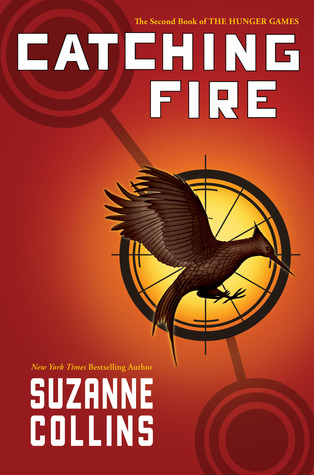
Catching Fire, by Suzanne Collins. Unabridged audio.

There are many best-selling authors, both in YA and adult fiction, who I can't quite figure out how they became best-selling authors. They write predictable stories, involving plain characters, and demonstrate average literary skill.

And then there is Suzanne Collins. She is a best-selling author who deserves all of the accolades (and big sales) that she gets.

Before she hit it big with the Hunger Games series, Collins wrote the terrific Underland Chronicles for younger children, starting with the book Gregor the Overlander, released in 2003. These books sold well, but she did not become a superstar writer until The Hunger Games came out in 2008.

The events of Catching Fire follow very logically from the first book, and that is all I ask for in a sequel. There are murmurs of political uprising in some of the districts, which was touched on in the first book. Katniss is able to verify these uprising, ironically, only because of an ominous visit from President Snow. After he leaves, Katniss hears word that the mysterious District 13 may actually exist, and may actually be thriving.

When the details of the quarter quell games are announced, it becomes apparent that destroying Katniss and Peeta are Snow's main priority. Killing them is the best way to put down the brewing rebellion.

By the time we get into the second half of the novel, there is a sense of repetition, as Katniss and Peeta engage in another version of the brutal Games. There are new allies, new enemies, new aspects to this version of the Games, but there are a few chapters that make it seem that we've been there before. But Collins focuses on character moments here, and even when the action seems familiar, the political tensions manifest.

The ending of the novel comes quickly, and it does end on a cliff-hanger, which is standard for the second volume in a trilogy. There is a sense of the society teetering on the edge, and I have no idea how the series will end. But I am looking forward to reading the next one, to find out.

Friday, May 3, 2013

Retro-Reviews: The Fly & Private Strong

The Double Life of Private Strong, issues 1 & 2, August 1959, by Joe Simon and Jack Kirby. 
Adventures of the Fly, issues 1 & 2. August & September, 1959, by Joe Simon and Jack Kirby. This series and character lasted much longer, but Simon and Kirby collaborated on only the first two issues.
By 1959, Archie Comics thought it was a safe time to bring superheroes back into their comic books. These two titles reunited comic creators Joe Simon and Jack Kirby for a brief time, after which Jack moved to the warmer climes of California and Joe relocated to the center of the comic book world, New York City. These issues represent their final steady work together, the two only reuniting once after, for a single issue of The Sandman in the 1970s.

Private Strong is a straightforward action-adventure comic, telling the story of a boy raised from birth by his mad-scientist father to be a man of advanced physical and mental  power. His "double life" is as a recruit in the armed services, and as the costumed adventurer The Shield. Simon dialed back the over-the-top humor for these stories, and Kirby also dialed back the over-the-top art style -- the only memorable art scenes were the first few pages of the origin issue. So this ends up being a little more than a standard spy comic, telling standard spy stories. They were fun, they were fine, but they were nothing special.

The Fly is a more traditional superhero story, a mish-mash of their earlier character Captain 3-D, with a little Shazam and Supergirl thrown in. An orphan boy receives a magic ring from that along with a magic phrase, can turn him into the super-powered Fly, and speaking his own name turns him back into the young Tommy Troy.

In his first mission, he exposes the corrupt orphanage manager, and then moves into more traditional crime-fighting behavior. One adventure ended with the Fly tying up his quarry (the criminal mastermind The Spider) in a net and hanging him up for the police to find later, a feat that would come a common trick for a certain spider-based hero a few years later. There is some interesting art choices in the Fly stories, with many of the individual stories starting with double-page splashes, adding a sense of epic scope to the stories.

These were later reprinted in the early 1980s in Archie's Blue Ribbon Comics series.

Source: public library.

Wednesday, May 1, 2013

April Reading List

22. Quitter (ua) , by Jon Acuff.
21. The Bone Bed (ua), by Patricia Cornwell.
20. Stop Asking Jesus Into Your Heart (hc), by J.D. Greear
19. Left Behind: The Kids #28 (pb), by Jerry B. Jenkins, Tim LaHaye, & Chris Fabry
18. Left Behind: The Kids #27 (pb), by Jerry B. Jenkins, Tim LaHaye, & Chris Fabry
17. Left Behind: The Kids #26 (pb), by Jerry B. Jenkins, Tim LaHaye, & Chris Fabry
16. Time Travelers Strictly Cash (aa), by Spider Robinson
15. The Devil's Company (ua), by David Liss
14. Deadly Straits (ua), by R.E. McDermott

-----------------------------------
earlier in 2013:
13. Doctor Who: Paradise Towers (ua), by Stephen Wyatt
12. DC Universe Secret Origins (gn), by various writers and artists
11. The Gods of Mars (ua), by Edgar Rice Burroughs
10. Craving Grace (hc), by Lisa Velthouse
9. The Sign of Four (ua), by Sir Arthur Conan Doyle
8. DC Dead (ua), by Stuart Woods
7. A Study in Scarlet (ua), by Sir Arthur Conan Doyle
6. The Hunger Games (ua), by Suzanne Collins
5. Take Three (ua), by Karen Kingsbury
4. Mary Through The Centuries (hc), by Jaroslav Pelikan
3. Roil (ua), by Trent Jamieson
2. The Devil You Know (ua), by Mike Carey
1. Ender's Shadow Ultimate Collection (gn), by Mike Carey

Tuesday, April 30, 2013

Teaser Tuesday

Teaser Tuesdays is a weekly bookish meme, hosted by MizB of Should Be Reading. Anyone can play along!
Just do the following:
Grab your current read.
Open to a random page.
Share two (2) “teaser” sentences from somewhere on that page.

BE CAREFUL NOT TO INCLUDE SPOILERS! (make sure that what you share doesn’t give too much away! You don’t want to ruin the book for others!)

From Chapter 2 of Catching Fire, by Suzanne Collins: "In my mind, President Snow should be viewed in front of marble pillars hung with oversized flags. It's jarring to see him surrounded by the ordinary objects of my room. Like taking the lid off a pot and finding a fanged viper instead of stew."

Sunday, April 28, 2013

Book Review #22

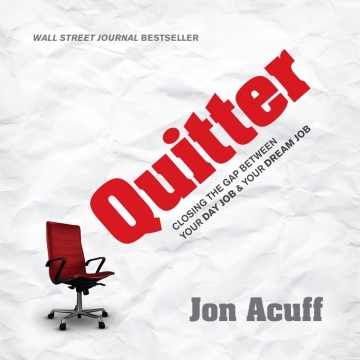
Quitter, by Jon Acuff. Unabridged audio. 

I am not a big reader of self-help or personal management books. So I confess to being a little out of my area of expertise in reviewing this book.  The focus of this book is on the tension many feel between the day job they currently have and the dream job they'd love to have.
 
The author talks about his own experiences of hopping from job to job, at one point bragging to his wife for actually sticking with one job for almost two years. Then he details how he was able to move into his dream job (working as a writer and speaker with the Dave Ramsey organization) while keeping his current job and maintaining a family life.
As can be the case with self-help books (and why I read so few) is that this book taught me a lot about Jon Acuff and his career path, but I don't know if this taught me about seeking my own dream job (confession: I currently have a pretty awesome job, pretty much a dream job, but let's not tell my employer that, OK?). His dream job (writing) was one that he could develop (via blogging) while continuing to hold his day job until he was ready to leave that old job behind. I don't know that that is the case for all of his readers.
One part of this book that I found most interesting was Acuff's discussion of the "freemiuml" or the "pay whatever you want" models that have been popularized in recent years. He does not take a side in the discussion, presenting both sides of the argument, saying that in some cases giving work away for free may generate loyal customers, while also recognizing that it may train your customers to not pay for your work.
HIs advice about the practical groundwork one must lay before chasing a dream is also strong. He talks about rules in the areas of family and relations, communication, and finance that are very wise. There were other particular moments that resonated with me, although this has not motivated me to go out and read many more self-help or personal management books.
Acuff reads this audio version himself, and as a professional speaker, he generally does a good job. There are even  a few additional stories he tells on the audio that were not in the print version of the book. But I do wonder about the production process, because there were a handful of words that were clearly mis-pronounced, which rarely happens in the many audiobooks that I listen to.
Source: I received this book via the NoiseTrade website, which uses the "pay whatever you want" model.